Veeder Logo

Veeder-Root History

Veeder-Root headquarters in Simsbury CTThen & Now

Then . . .
Veeder-Root innovations have met the petroleum industry's growing needs for nearly a century. Veeder-Root's beginnings can be traced to 1866, when the Root Company, a hinge manufacturer, was founded in Bristol, CT. The following year, the company expanded to manufacture counting and measuring devices for production, textile equipment and census taking.

It's Nice to Know How Far You Go
Almost 30 years later in 1895, Curtis Veeder, the founder of Veeder Manufacturing Company, invented a Cyclometer to record the miles traveled on a bicycle. He promoted the Cyclometer with the slogan, It's Nice to Know How Far You Go. The Cyclometer's success led to a full line of Veeder counting devices.

In 1928, the Root and the Veeder Companies merged to form Veeder-Root, Incorporated of Hartford, Connecticut, the largest manufacturer of counting and computing devices in the world.

Fill'er Up!
While the majority of Veeder-Root's customers used the counters to control manufacturing processes, in the early 1930s, one customer had the foresight to incorporate a Veeder-Root counter into his gasoline pump. This innovation introduced Veeder-Root to the petroleum industry and marked its beginning as a petroleum technology leader. These new mechanical computers allowed gas station attendants to "fill'er up" without having to calculate cash sales as they pumped gas.

Through the 1940s, 1950s and 1960s, Veeder-Root counters went through many changes because of wartime material shortages, growing competition and the addition of tenths of cents to the counters. Through these decades of change, Veeder-Root mechanical computers could be found on more than 90 percent of U.S. and Canadian gasoline pumps.

Inventory Control
Around the same time, Veeder-Root engineers were developing an accurate meter register and ticket system for gasoline delivery tracking. Their experiments with inventory control devices sparked ideas that later surfaced in Veeder-Root's Tank Level Sensing (TLS) product line during the late 1970s.

With the late 1970's gas crisis, gas station owners needed accurate inventory control and the ability to detect product loss. During this time, Veeder-Root pioneered the automatic tank gauge and released the first generation of TLS monitoring products, the TLS-100, in 1979.

Monitoring and Communicating
Meanwhile, Veeder-Root engineers were already developing the second-generation of TLS products, the TLS-250, which was released commercially in 1981. The TLS-150 incorporated customer suggestions with monitoring, reporting and communicating features for accurate leak detection and inventory control. The TLS-150 met tank owner and operator's business needs and protected the environment by detecting leaks before they caused serious damage.

In 1994, Veeder-Root added value to automatic tank gauging with TLS-350R. The TLS-350R combined the automatic inventory management capability of Business Inventory Reconciliation with advancements in line leak detection and communication capabilities. With the rapid progress of new compliance and reporting features in the TLS product line, Veeder-Root focused on engineering equipment that was easy to use and understand.

Point and Click
In the 1990s, site owners struggled with managing huge amounts of data during their workday. The release of TLS-PC 32 software in 1996 further minimized customer's administrative workload and worries. A simple point and click allowed customers to reference "at a glance" site status reports and archived TLS information including inventory, compliance and reconciliation data. During that same year, Veeder-Root released wireless pressurized line leak detection (WPLLD). Installed on more than 27,000 working lines in the field, WPLLD provided customers with a cost-effective compliance tool that didn't" interrupt existing piping installations or communication channels. Veeder-Root again minimized business interruptions while providing advanced compliance solutions.

Growing Awareness of the EPA Deadline to Upgrade Underground Storage Tanks
The impending 1998 deadline to upgrade underground storage tanks raised awareness surrounding compliance issues during the mid 1990s. Veeder-Root responded in 1997 with Simplicity Petroleum Data Services, marking the company's entrance into the petroleum services arena. Simplicity offered customers 24x7 remote monitoring, automatic data collection and information management so they could efficiently meet leak detection and compliance reporting needs. Veeder-Root's Simplicity Operation Center connected to customer sites via modem or satellite to offer secure, round-the-clock alarm response.

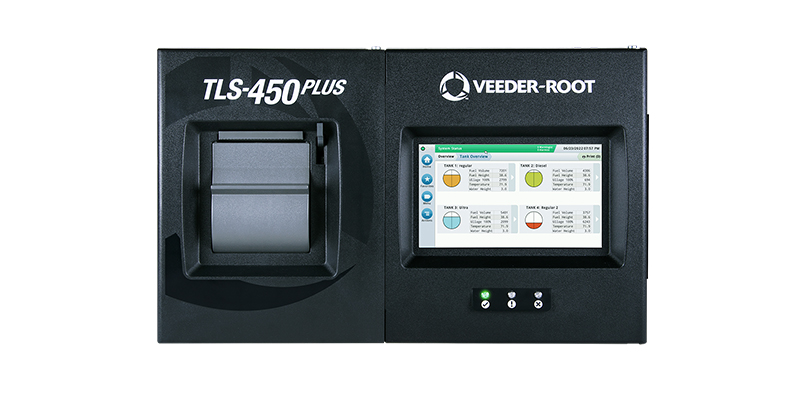
Once the EPA deadline passed, petroleum business owners began to focus on ways to optimize their fuel management processes, especially inventory. Veeder-Root responded in 1998 with Simplicity Fuel Logistic Services to help site owners avoid run-outs, haul-backs and overfills. Veeder-Root continued to address these issues with the 1999 release of TLS-NT, a software package that helped customers identify and reduce fuel losses. TLS-NT also was cost-efficient as it could run on back office or point-of-sale systems, eliminating the need for expensive tank gauge consoles.

More Control
Compliance and line leak detection concerns, however, were not forgotten. Bombarded by information, regulatory practices and administrative duties, customers needed fuel management solutions, but still wanted control over the process. Veeder-Root responded in 1999 by releasing Inform. Inform software provided site owners with inventory, leak detection and diagnostic information that was centralized, accurate and customizable. With Inform, customers could now tailor the information, and the polling frequency of that information, by site.

Now . . .

The company continues its legacy of market leadership with a myriad of product upgrades and new product offerings designed to help customers keep pace with ever changing market conditions and regulations. VR’s new TLS-RF Wireless System provides a viable way to achieve communications between tank gauge components in situations where it isn’t practical to install tank gauge wiring and conduit. Its system and communications protocol is designed to meet the demanding tank gauging requirements at retail petroleum stations.

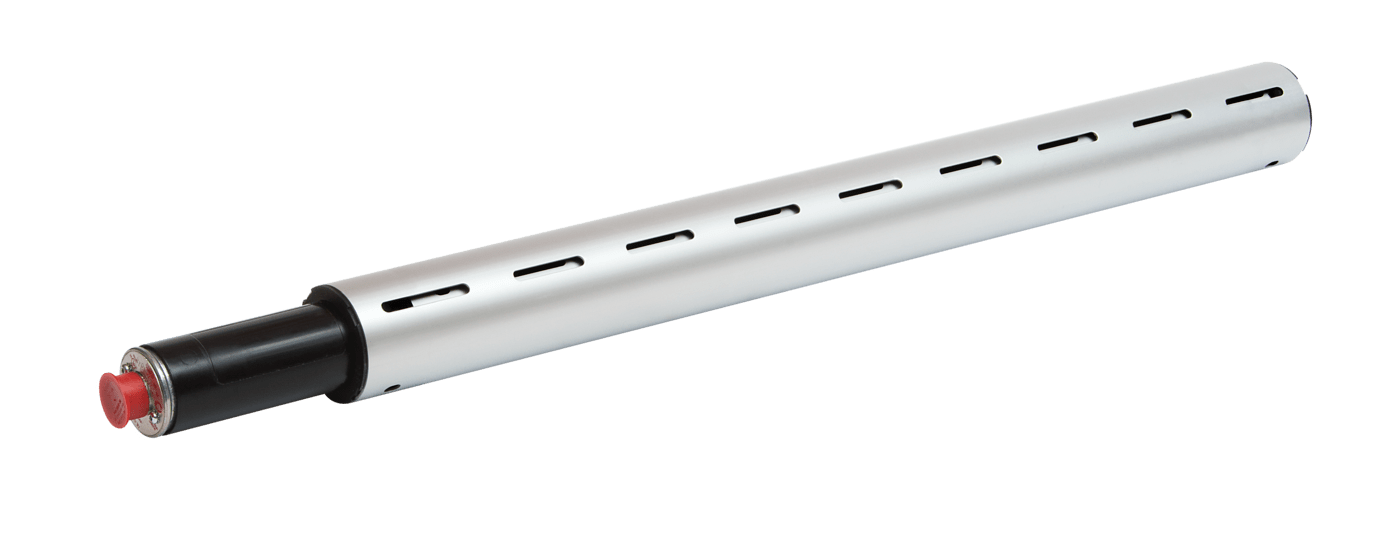
With the protection of groundwater more critical than ever, VR recently announced the Mag Plus Probe that provides leak detection at a wider temperature range than previous
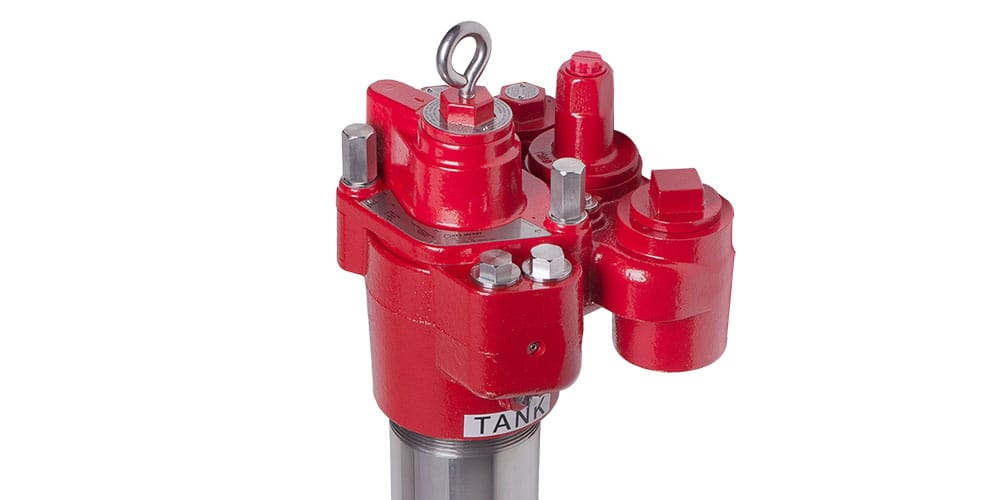
gauges for robust measurements even at lower temperatures such as in the Northern regions. It also provides greater accuracy to even lower tank levels than previous probes. In addition, VR’s new Mag Sump Sensor detects hydrocarbons or water in containment sumps or dispenser pans in order to eliminate costly and unwarranted service dispatches and to allow for quick periodic operability testing when needed. As part of its Red Jacket line of submersible petroleum pumps, VR recently released its Red Jacket Variable Speed Flow Controller which offers the most advanced variable speed technology and delivers the fastest and most efficient flow while maintaining maximum flow regulations. And on the petroleum product front, VR has announced its EMR3 DataLink product which provides an affordable solution for automated data collection and communication between electronic registers and the back office.

One of VR’s newest environmental solutions is the Secondary Containment Vacuum Sensing System, designed to detect leaks
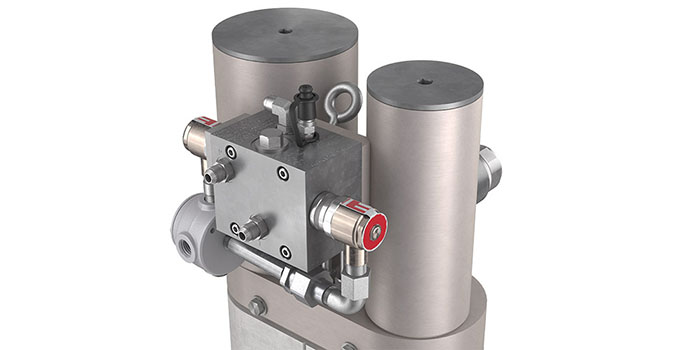
in double-walled tanks and piping systems while helping to contain a release of product while under vacuum. Another is VR’s new ISD (In -Station Diagnostics) system, which is designed to monitor hazardous emissions that lead to air pollution.

   
Contact Us | Danaher Corp | Gilbarco | Gasboy | Privacy | Legal | Site Map
Copyright © 2012 The Veeder-Root Company All rights reserved. Unauthorized duplication prohibited.