Veeder Logo

Compliance and Throughput

Compliance with Release Detection Requirements for High Throughput Underground Storage Tanks
It may seem a bit delinquent to review compliance methods for underground storage tank (UST) release detection requirements that became law in 13 years ago in 1988. However a number of issues are contributing to the continuing and even growing difficulty that petroleum marketers face in attaining compliance on high throughput UST's, while the industry faces growing pressure to re-write environmental regulations to eliminate single-wall tank systems.

1. Throughput per tank is increasing.

As fuel demand increases and the retail site population contracts to <150,000 retail sites, the volume per site and per tank is steadily increasing. The population of tanks that is classified as high-throughput by the leak detection providers and regulatory community increases each year.

2. Some sites significantly exceed original throughput estimates.

Hypermarkets and other marketers have underestimated the potential fuel volume at many sites, resulting in under-sized tanks, and single-wall tanks at very high throughput sites. These tanks not only present a compliance dilemma, but also challenge the traditional fuel supply infrastructures to keep up with growing demand in small single-wall tanks.

3. A large population of older single wall tanks still exists.

Tanks installed prior to tank owner awareness of pending release detection requirements may not be designed for ease of compliance. Unfortunately some marketers were installing difficult-to-manage single wall tanks at high throughput sites as late as the mid-1990's, and these tanks are still early in their life cycle.

A number of single-wall tanks are currently eligible to rely on monthly inventory control for the first 10 years of tank life, augmented by a precision tank test every five (5) years. These tanks are subject to monthly release detection requirements beginning in year 11 after installation or tank upgrade.

4. Awareness and enforcement are increasing.

Recent events such as the GAO (General Accounting Office) report on the effectiveness of leak detection programs and growing state enforcement programs are increasing the amount of attention paid to the consistency and adequacy of leak detection records. Previously acceptable practices, such as augmenting a monthly release detection program with precision tank testing every 3 to 6 months, are receiving more scrutiny and in some cases a call for corrective action.

Tank owners need to be increasingly aware of the regulatory environment and the options available to them for high-throughput UST's

The Early History of Release Detection Requirements for Tanks

The current federal minimum standards for release detection from UST's were established by the Environmental Protection Agency (EPA) in 1988. "Monthly Monitoring" was mandated for all UST's over 550 gallons in size except for optional Monthly Inventory Control and precision tank testing every 5 years for the first 10 years of tank life. Referencing the technologies available at the time, monthly monitoring was defined specifically as Automatic Tank Gauging, Vapor Monitoring, Interstitial Monitoring, or Ground-Water Monitoring. Specific definitions, requirements, and third party certification processes for each were provided.

The regulations provided that "Other Approved Methods" can be used if they are as effective as the allowed methods and if they obtain specific approval from the implementing agency, which in most cases is the state environmental department.

Of course the EPA did not invent environmental and safety protection for UST's in 1988.

States and local fire and safety departments have long mandated regular bookkeeping and reconciliation of stored petroleum to detect large losses, and many UST's remain subject to these recordkeeping requirements in addition to federal standards for monthly release detection. Many of these older regulations are now being enforced and tank owners are subject to a variety of monthly, weekly, or 10-day rolling reconciliation requirements on a state and local level.

Post-1988 Technology and Regulatory Developments in Release Detection for Tanks

The original methods defined by the EPA were relatively expensive to install and maintain, and, in the case of Automatic Tank Gauging, required tanks to be shutdown for the duration of the monthly test, typically 2 to 4 hours.
Recognizing the potential benefit to the petroleum industry and the emerging market opportunity, suppliers quickly began to develop compliance solutions that reduced capital investment and installation expense, and eliminated the need for tank shutdown. The prominent methods developed and widely used today are Statistical Inventory Reconciliation (SIR) and continuous tank testing, sometimes known as Continuous Statistical Leak Detection (CSLD). As envisioned by the EPA, developers sought approval directly from state and local agencies and were successful in establishing broad acceptance for these alternative leak detection methods. Today, every state accepts one if not both of these methods in some form.

Lacking specific guidance from the EPA, the approval processes for these methods were as a result inconsistent and often lacked the specific information or evaluation process desired by the states. As one would expect, the 50 states established different guidelines for approval and in many cases increased the requirements for new approvals after early systems had already been authorized. Manufacturers provided differing guidance for the appropriate use of these technologies. The result has been a confusing environment of allowed methods and acceptable restrictions.

The California State Water Resources Control Board (SWRCB) has attempted to rationalize the approval of these methods and the restrictions surrounding their use, with some impact to the rest of the nation. California requires additional leak detection methods in addition to SIR and promoted the development of a uniform protocol, known as the Continuous In-Tank Leak Detection System protocol (CITLDS) for the evaluation of continuous leak detection systems. All continuous tank testing systems used in California must conform to CITLDS.

To manage the growing complexity and diversity of approvals and certifications, the EPA and leading states formed a National Workgoup to develop and maintain a list of certified release detection methods. As the Workgroup formalized its initial lists after the development of CITLDS, the workgroup lists only continuous tank testing systems that conform to CITLDS. Lacking a uniform protocol for SIR, the workgroup lists most approved SIR methods.

States agencies are not required to conform to workgroup approvals and typically do not, and in some cases cannot, rescind approvals that were issued by the state prior to the formation of the workgroup. States may or may not require additional leak detection methods, such as precision tank testing every other year, in addition to the use of SIR.

The Impact of Throughput on Release Detection

The original methods defined by the EPA (Automatic Tank Gauging, Static Tank Testing, Vapor Monitoring, Interstitial Monitoring, and Ground-Water Monitoring) operate independently of throughput. They work equally well at any sales volume. They remain relatively expensive to install and/or require the tank to be removed from service for the duration of the monthly test.

The newer methods, SIR and continuous tank testing, rely on the identification of leak patterns from analysis of tank data. Throughput, along with other factors, impacts the ability of the systems or providers to identify leak patterns and provide consistent results

Throughput and Statistical Inventory Reconciliation (SIR)

As a method, SIR is not legally restricted by throughput. However SIR providers are expected to determine with 95% Probability of Detection that a leak at a rate of 0.2 gph will be detected. Confidence of <95% results in an "Inconclusive" call for the tank.

Owners of single-wall tanks using SIR are familiar with the increasing rate of inconclusives as throughput increases. While SIR is not inherently invalid at high throughput, inconsistent results can become a significant problem in terms of regulatory acceptance or the cost and inconvenience of follow-up precision tank testing. Typical data collection problems are inaccurate delivery records, lack of temperature records, poor inventory readings due to tank tilt or other factors, and lack of synchronization of the meter (sales) and stick (inventory) readings.

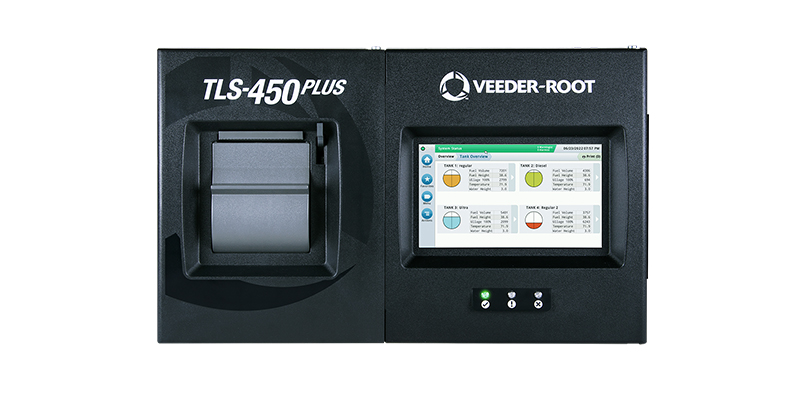
At any throughput, SIR results can be significantly improved by improved data collection. Acceptable SIR results can be extended well into the high throughput range by focusing on improved data collection processes. The use of a tank gauge to collect net and gross inventory and temperature for every period, and the use of automated reconciliation programs to guarantee synchronization of sales and inventory records, can greatly enhance the usefulness of SIR as a compliance tool at high throughput sites.

Throughput and Continuous Tank Testing

Contrary to popular opinion, continuous tank testing is also not legally restricted by throughput, except under CITLDS. Valid test results from continuous tank testing products such as Red Jacket's ADD, Incon's SCALD, or Veeder-Root's CSLD that received state approval prior to the emergence of CITLDS are not subject to throughput limitation. Rather these systems automatically provide only those results that meet the 95% Probability of Detection threshold.

These systems evaluate precise temperature and level changes in periods between dispensing to determine with 95% Probability of Detection that a leak at a rate of 0.2 gph will be detected. Analagous to the SIR inconclusive, these systems will report "No Idle Time" or "Rate Increase Warning", when insufficient data exists to determine the leak rate with adequate confidence. In addition to the potential lack of tank quiet time in busy periods, many problems can contribute to loss of tank test results including shifting thermal coefficients of delivered product, extensive thermal expansion from piping systems back into tanks, defective pump check valves, defective dispenser communication, and persistent tank disturbance. Attention to these issues can greatly improve the performance of these systems at high throughput sites.

As these systems are part of an on-site environmental protection program, they attempt to produce test results daily, and are often programmed to alert the user when records do not allow an leak detection result to be determined for the day. This type of alarm does not inherently reflect a non-compliance event which in most cases is the inability to produce a result within a calendar month.

A great deal of regulator and customer education is still needed on the use of continuous tank testing methods at high throughput.

Leveraging Automation and Proactive Follow-up to Improve Results

It is inappropriate and unethical to attempt several release detection methods and report the one that provides the desired result. Many jurisdictions require the primary release detection method to be approved and filed with the tank registration.

However it is common and appropriate to use one method to follow-up another that was unable to provide a result in a particular month. For example, many SIR customers use Automatic Tank Gauges to record a static test result, or a tank testing service to record a precision tank test, to verify that tanks are tight in the event of an SIR inconclusive. They return to the SIR method the following month when data collection problems have been resolved.

As data collection networks proliferate, and users and SIR providers gain easy access to Automatic Tank Gauges for static tank test results and to evaluate the condition of interstitial, groundwater and vapor sensors, a range of services will emerge that not only provides and records the initial compliance result, but then also automatically pursues follow-up evaluation on non-compliant tanks.

Increasing the Effectiveness of Approved Methods

The physics of detecting absolute quantities of lost product as throughput increases will not change. At 400,000 gallons per month, the target detectable leak rate is <.04% (as in .0004) of throughput. At the same throughput, the regulated target is the identification of a loss of 144 gallons when the API (American Petroleum Standard) for reasonable control of the product is to reconcile within 2,000 gallons.

However consistent compliance results can be realized on a substantial population of high throughput single wall tanks by supporting the existing methods with proper corrective action, education of regulators and tank owners on the legal and performance limitations of different compliance methods, and proactive compliance follow-up programs.
   
Contact Us | Danaher Corp | Gilbarco | Gasboy | Privacy | Legal | Site Map
Copyright © 2009 The Veeder-Root Company All rights reserved. Unauthorized duplication prohibited.