ATG Inspections
The Role Of Inspections In Complying With Release Detection Requirements For Underground Storage Tanks
It seems a fairly straightforward question: Am I required to regularly inspect my Automatic Tank Gauges (ATG's)? Underground Storage Tank (UST) owners are facing this question more often as regulatory agencies release new guidelines and strengthen their enforcement programs.
The answer is not easy to discern, but rather lies beyond a range of complexities in the regulatory environment.
First of all, what is an Automatic Tank Gauge?
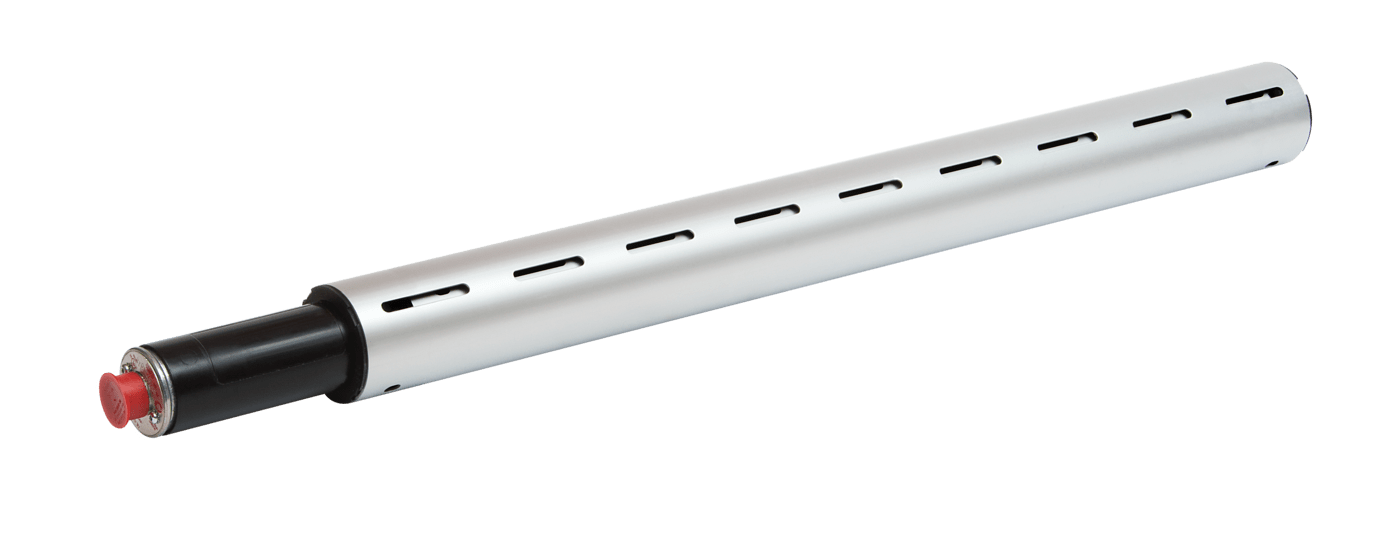
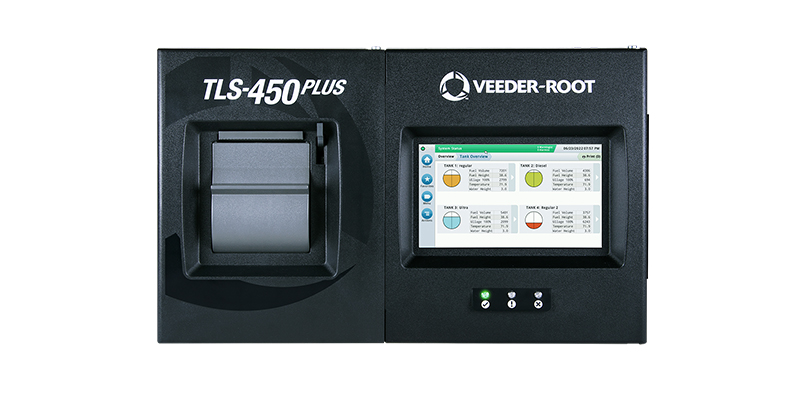
The term Automatic Tank Gauge (ATG) is defined by the EPA in 40 CFR Part 280.43(d) as equipment that tests for loss of product that "can detect a 0.2 gallon per hour leak rate from any portion of the tank that routinely contains product". This narrow definition applies to tank gauging consoles and the level measurement probes installed into the tank to take fuel and temperature readings.
However today's "ATG's" have evolved to handle a wide range of environmental monitoring at UST sites -- including groundwater monitoring, double-wall "interstitial" monitoring, pressurized line leak detection, and dispenser pan monitoring.
ATG's also supply the inventory measurement used in daily inventory control. The EPA, in 40 CFR Part 280.43(a) and (a)(2), requires monthly product inventory control to 1% of flow-through plus 130 gallons, and specifies that the equipment used is capable of measuring product level to the nearest one-eighth of an inch.
So who sets the standards?
The 1988 EPA requirements contemplated and provided guidance on the issue of equipment maintenance. 40 CFR Part 280.40(a)(2) states: "Owners and operators of new and existing UST systems must provide a method, or combination of methods, of release detection that is installed, calibrated, operated, and maintained in accordance with the manufacturer's instructions, including routine maintenance and service checks for operability or running condition". This section and guidance applies to all release detection methods and covers tanks, piping, sumps, groundwater wells, etc.
The third party evaluation process repeats the theme. Every ATG certification lists the same statement: "The performance estimates above are valid only when the vendor's instructions for installing and operating the ATGS are followed."
All subsequent federal documentation including the Getting the Most Out of Your Automatic Tank Gauging System EPA-510-F-98-011) and the Reference Manual for Underground Storage Tank Inspectors (EPA-510-B-00-009, August, 2000) make the same recommendation.
So does this mean the manufacturer dictates the inspection requirements?
Not exactly. The EPA also provides additional guidance regarding the use of automatic line leak detectors for pressurized piping systems. 40 CFR Part 280.44(a), which applies strictly to automatic line leak detectors, states: "An annual test of the operation of the leak detector must be conducted in accordance with the manufacturer's requirements". Tank gauging systems can monitor pressurized piping systems, and sometimes serve as the automatic line leak detector.
So does this mean that the manufacturer dictates the requirements, and must require at least an annual test of automatic line leak detection equipment? Not exactly.
The EPA standards are not unilateral national guidelines. Rather, each state is required to maintain and implement an environmental protection program that is at least as stringent as the federal performance standards. States have authority to mandate additional testing and inspection procedures.
So does each state determines inspection requirements?
Not exactly. State and local regulators want more frequent and effective inspections, not only to detect malfunctioning equipment, but also to improve education and identify users who are not completing and recording required monthly tests, and negligent users who purposely or inadvertently defeat systems. However, existing state regulation can be unclear or even silent on the issue of inspection requirements.
Carrying varying degrees of local authority, regulators can and do effectively create inspection requirements by requiring enforcement teams to verify equipment operation. As a result, inspections can be more strictly enforced in some areas of a state than in others. It can be difficult to determine the specific inspection requirements in a given market.
So does this mean that minimum inspection requirements are defined by the manufacturer, but are potentially subject to more stringent requirements established in state regulation or by the enforcement practices of state and regional enforcement teams? Precisely.
What are the manufacturer's recommendations?
Release detection systems, particularly electronic systems, are capable of carrying much of the burden to determine that they are working properly and that tests are valid. Manufacturers leverage this capability to design systems that require minimal or no intervention to validate test results.
Veeder-Root in particular has significant expertise and information in the management of leak detection programs. We currently manage compliance programs for over 25,000 tanks using leak-detect results from automatic tank gauges, and for over 60,000 tanks using Statistical Inventory Reconciliation (SIR). The tank gauges include Veeder-Root and models from other manufacturers as well.
Leak detection methods and systems are not infallible. Because the intricacies of measuring tiny changes in volume and temperature create substantial engineering challenges, the EPA will only certify systems that meet a minimum 95% Probability of Detection (Pd) and 5% Probability of False Alarm (Pfa). Most systems on the market fall between 98% Pd and 100% Pd. Proper understanding is required to determine which portion of the UST system is, in fact, tested by the release detection method.
Veeder-Root recommends regular evaluation of tank and line leak test results, combined with proactive follow-up on sites that do not achieve regular results, as a highly effective means of confirming release detection performance and minimizing the time between releases and their detection.
Where mandated, on-site UST system inspections, especially those that include an evaluation of regular monthly tank and line leak test results, are helping to improve compliance rates. Problems discovered in on-site inspections include disabled or defeated systems, improper set-up, failed equipment, missing test results, lack of education, etc. These problems are equally identifiable by a program of regular and proactive review of tank and line test results, either electronically or by collection of monthly ATG printouts, and follow-up on tanks that do not achieve consistent results.
What is happening at the state and local level?
Regional, state and local initiatives are underway to clarify inspection requirements.
Examples, not at all comprehensive, follow:
Most states, such as New Jersey, Pennsylvania, and South Dakota have affirmed in recent documentation that regular review of leak test results is sufficient evidence of the proper operation of leak detection systems. The following example is from the Summer 2000 edition of Storage Tank Monitor, a Pennsylvania Department of Environmental Protection publication:
"Every method of tank leak detection requires a record documenting that the method is working and that there are no indications of a release. The record is required to show at least a monthly check of the leak detection/method/equipment. In some cases, the equipment will produce a written record or printout that verifies a test was performed and the results were satisfactory."
EPA OUST (Office of Underground Storage Tanks) has initiated the National UST Operations and Maintenance (O&M) Manual Working Group, which in addition to EPA, OUST and others received support from Alaska, Washington, Utah, New Mexico, South Carolina, and Vermont. They have released a useful maintenance manual, Operating and Maintaining Underground Storage Tank Systems.
Effective March, 2000 Alaska requires annual inspection by the owner, and inspection every three years by a state-certified Operations Inspector. Both inspections include verification of monthly leak-detect results and maintenance of ATG's in accordance with manufacturer's requirements.
States generally cannot implement third-party inspection requirements without amendment of state regulations. Consequently, it is not clear whether the O&M manual will be adopted by other states such as Washington and South Carolina, or whether these states will even consider third-party inspections.
The most aggressive inspection trend in state regulation appears to be in California, where the State Water Resources Control Board (SWRCB) is proposing regulation amendments that will mandate, among other issues:
-
Annual system certification by licensed and certified technicians
-
Certification and re-certification requirements for third-party inspectors
-
Hands-on functional testing of leak detection components
-
Inspection of sensor position in containment areas
-
Visual inspection of tank probes for damage and residue build-up
At the writing of this article, these California regulations are in the comment phase, and Veeder-Root continues to provide input to the rulemaking process on behalf of itself, the provider community, and the tank owners. These regulations could be in place as early as January 1, 2002.
While evolving state requirements inevitably will extend the requirement for system inspection beyond Veeder-Root's initial recommendations, we intend to develop instructions and training material that will help customers safely and efficiently comply with emerging inspection requirements.
Quantitative Testing of Electronic Line Leak Detection Systems
Regulators are increasingly taking the position that the federal guidelines in CFR Part 280.44(a) ["An annual test of the operation of the leak detector must be conducted in accordance with the manufacturer's requirements"] dictate a functional on-site test of electronic line leak detectors.
Manufacturers generally take a different position. Veeder-Root systems, for example, perform the required functional test as part of every 3gph and precision test, and Veeder-Root maintains that regular completion of 3gph and precision tests inherently meets the EPA's functional test requirements.
Some counties and states are requiring a quantitative test of electronic line leak detectors, in which 3gph and even 0.2 gph and 0.1 gph leaks are simulated on-site, and the detection and required shutdown confirmed. These field procedures raise a number of issues for the industry to resolve:
Test Procedure: The operation of electronic systems vary by manufacturer and model. The tests do not always run during pump start-up as would be the situation with mechanical leak detectors. A test for a mechanical leak detector may not adequately exercise an electronic system. A unique test procedure for each model will be required.
Coordination: Many electronic systems are remotely monitored by the customer or a designated third party. The quantitative test by definition produces an alarm which will initiate a response by the monitoring center. Co-ordination with the party(s) providing remote monitoring will be required. Documentation of the alarm closures will need to reflect the inspection process.
Safety: Quantitative testing requires unrestricted product flow through an orifice into a container, during part of which the submersible pump must remain on. Electronic systems control submersible pump operation, and routinely turn the pump on at various intervals to perform leak detection functions. These intervals may change depending on the site configuration, such as type and length of piping. Clear procedures are required to ensure that the pump, which must be on to enable the test, cannot run while the test apparatus is being installed, or when the container is not safely in place.
System Operation: Upon detecting the induced leak, the electronic system may disable the submersible pump. Different models have various procedures for confirming a no-leak condition, and returning the pump to proper operation. Technicians will need specific post-test procedures for each model tested.
While Veeder-Root does not currently plan to recommend regular quantitative testing of electronic line leak detection systems, we do believe it will be mandated by a limited number of state and local jurisdictions. To help customers comply, we intend to develop hardware, instructions, and training material to allow for safe and proper quantitative testing of electronic line leak detection systems.
Functional Testing of Containment and Double Wall Sensors
Functional testing of containment and double-wall sensors is also the focus of regulatory debate. hrough the use of fail-safe sensor designs that allow systems to self-detect and alert to sensor failure, manufacturers, including Veeder-Root, have maintained that properly installed systems need little inspection, provided that sensor status is routinely evaluated either remotely or through the collection of monthly system reports
However containment sensors can possibly be rendered less effective if they are moved to different or higher locations within the containment. Since these sensors are sometimes used as primary and even exclusive protection for tanks and piping, regulators are increasingly requesting routine inspection of sensor placement and operation.
In addition to some of the problems noted above relating to quantitative electronic line leak testing, field inspection of double wall tank sensors can present a particularly nasty problem. If an inspection of a double wall tank sensor on a fiberglass tank occurs when the tank is completely full, it may be difficult, but not impossible, to remove the sensor for inspection by pulling on the installation cord. However, it can be quite impossible to push the sensor back into proper position after the inspection, at least until the tank is partially emptied.
How should equipment manufacturers respond to the emerging trends?
We believe that it will continue to be the release detection equipment manufacturer's responsibility to serve its client tank owners by identifying procedures which, if followed, will provide a high level of assurance that the results achieved are valid. They should also continue to promote routine evaluation of results, follow-up on missing or failed test results, and proper documentation of any events.
We also believe that regulators, who have the responsibility to build enforcement programs, will continue to define additional processes to deter non-compliance and negligence.
These objectives are not in conflict; rather they are complementary. Manufacturers will define the procedures that properly evaluate compliance results. States will determine if licensed technicians are required to carry out evaluations, or if procedures to detect fraud or defeated systems are required.
States can, and will, dictate more stringent inspection requirements for a variety of reasons. In these cases, it again becomes the manufacturer's responsibility to provide support and documentation for the safe and proper inspection of systems in accordance with state and local requirements.
So what does the UST owner do to confirm equipment performance and remain in compliance?
The most important and effective action to affirm performance of on-site release detection systems is consistent review of tank and line leak test results and sensor status, and proactive follow-up on sites with alarms or sites that do not consistently report positive results. A proactive program of recordkeeping and follow-up will keep the tank in release detection compliance in most cases.
Marketers should be aware of local or state requirements for quantitative line leak testing, functional sensor testing, on-site inspection, or inspection by licensed and certified technicians. This information is available through local regulators or the state environmental agency web sites, which sometimes also provide blank inspection reports. Qualified local service contractors are invaluable sources of insight into local requirements.
Where specific requirements exist, the manufacturer should make available specific guidance to aid the tank owner in complying with these requirements.